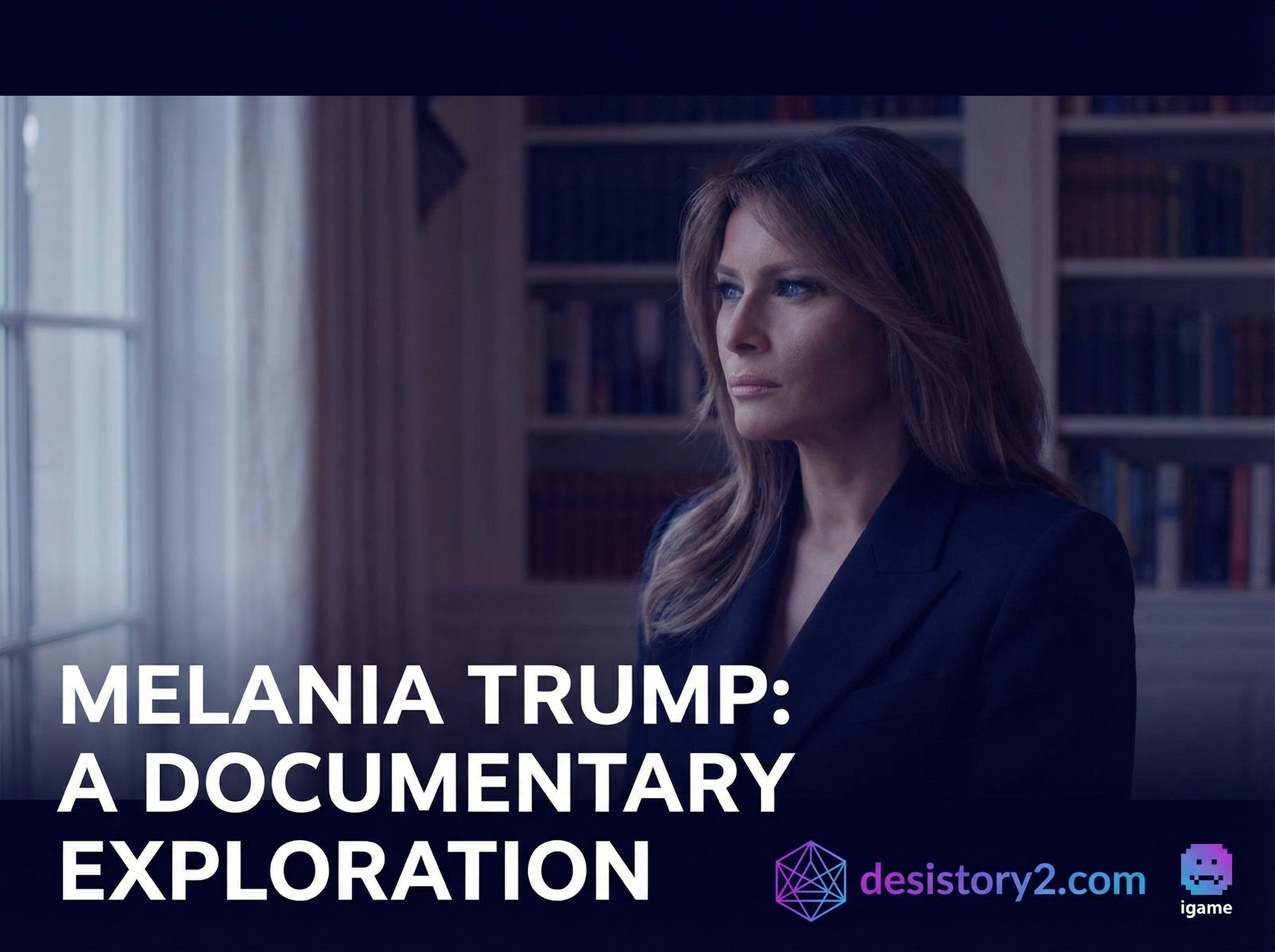
In an era where political spouses are expected to be both accessible and relatable, Melania Trump emerged as one of the most enigmatic and scrutinized First Ladies in American history. A new documentary promises to peel back the layers of this fascinating figure who navigated the White House with a quiet, often inscrutable demeanor that stood in stark contrast to her husband’s bombastic presidency. This article explores what a documentary about Melania Trump might reveal about her journey from Slovenia to the White House, her unique approach to the role of First Lady, and the complex legacy she leaves behind.

From Melania Knauss to First Lady: An Unlikely Journey
Any comprehensive Melania Trump documentary must begin with her origins. Born Melanija Knavs in 1971 in Novo Mesto, Slovenia (then part of Yugoslavia), her childhood under communist rule shaped her worldview in ways that few American First Ladies had experienced. The documentary would likely explore her early modeling career, her strategic move to Milan and later New York, and her fateful meeting with Donald Trump at a 1998 fashion party.
Unlike previous political spouses who typically had backgrounds in law, education, or advocacy, Melania entered the White House as a former fashion model and businesswoman with a multilingual background (she speaks Slovenian, English, French, Serbian, and German). This international perspective, combined with her experience in the competitive world of high fashion, equipped her with a unique toolkit for navigating Washington’s political theater—though she often chose not to use it in traditional ways.
“Be Best”: A Controversial Initiative
Melania’s official White House initiative, “Be Best,” focused on child well-being, social media usage, and opioid abuse. A documentary would likely examine the contradictions surrounding this campaign: her advocacy against cyberbullying while her husband regularly engaged in provocative online behavior, and her focus on children’s welfare while the administration implemented controversial immigration policies that separated families at the border.
What makes “Be Best” particularly interesting for documentary treatment is how it reflected Melania’s apparent desire to maintain some independence from her husband’s political agenda while operating within its constraints. The initiative received mixed reviews—praised by some for its focus on important issues, criticized by others as superficial or hypocritical—making it a rich subject for exploration.
The Fashion Diplomacy: Silent Messaging Through Style
Perhaps no First Lady since Jacqueline Kennedy has been as closely watched for her sartorial choices as Melania Trump. A documentary would undoubtedly analyze her fashion as a form of communication—from the pith helmet she wore on safari in Kenya (drawing colonial-era comparisons) to the jacket she wore to visit detained migrant children that read “I REALLY DON’T CARE, DO U?” (sparking endless interpretation).
Her fashion choices became a Rorschach test for political observers: were they carefully calculated messages, personal style preferences, or mere coincidences? This visual language, often at odds with her husband’s rhetoric, provides documentary filmmakers with rich visual material and symbolic depth to explore her complex positioning within the administration.
Behind the Scenes: Marriage Under the Microscope
The Trump marriage has been the subject of endless speculation, and any documentary would need to address this delicate subject. Unlike previous presidential couples who typically presented a united front, the Trumps often appeared physically and emotionally distant in public. Melania’s delayed move to Washington, her separate living arrangements during parts of the presidency, and her rare public displays of affection fueled endless speculation.
A responsible documentary would balance salacious interest with genuine inquiry into how their relationship functioned under unprecedented pressure. How did they negotiate their public and private roles? What influence, if any, did she wield behind closed doors? Former aides have offered conflicting accounts, with some describing her as a significant influence on certain decisions (like the firing of a staffer) and others portraying her as deliberately removed from day-to-day politics.
International Perspective: The Immigrant First Lady
Melania Trump remains the only First Lady born outside the United States, and her immigration story became particularly charged during an administration known for its restrictive immigration policies. A documentary would likely explore this irony and examine how her personal narrative intersected with policy debates.
Her path to citizenship—through the “Einstein Visa” for individuals with extraordinary abilities—contrasts sharply with the experiences of many immigrants the administration sought to exclude. How did she reconcile her personal story with her husband’s policies? Did she attempt to influence those policies from within? These questions form a compelling through-line for documentary treatment.
The East Wing Operation: A Different Kind of First Lady’s Office
Compared to her recent predecessors, Melania Trump maintained a remarkably small and tight-lipped staff. Her office released far fewer public schedules and details about her activities than previous First Ladies. This opacity itself becomes a subject for documentary exploration: was it a strategic calculation, a personal preference for privacy, or a reflection of her limited interest in the traditional ceremonial aspects of the role?
The documentary might contrast her approach with that of Michelle Obama, who maintained an active, highly visible schedule and engaged extensively with the media. This comparison raises questions about what we expect from First Ladies and whether Melania’s detachment represented a quiet rebellion against those expectations.
Documentary Approaches: Which Story to Tell?
Several documentary approaches could be taken to Melania Trump’s story:
- The Psychological Portrait: Focusing on her motivations, personality, and private self versus public persona.
- The Political Analysis: Examining her role within the Trump administration and whatever influence she wielded.
- The Cultural Study: Analyzing her as a product and reflection of contemporary celebrity culture intersecting with politics.
- The Feminist Reading: Exploring her as a woman operating within patriarchal structures, both in her marriage and in Washington.
- The Immigrant Narrative: Following her journey from Slovenia to the White House and what it says about the American dream.
The most compelling documentary would likely weave these threads together, presenting a multifaceted portrait that acknowledges the complexity of her position.
The Post-White House Chapter: Building a Legacy
Since leaving Washington, Melania Trump has maintained her characteristic privacy while engaging in selective public appearances, NFT ventures, and continued involvement with “Be Best.” A forward-looking documentary would consider how she is crafting her post-White House identity and legacy away from the constant scrutiny of 1600 Pennsylvania Avenue.
Her continued navigation of the Trump family’s political ambitions—including her husband’s 2024 presidential campaign—adds another layer to her ongoing story. How does a former First Lady support a presidential campaign while maintaining her own identity separate from politics? This evolving chapter offers rich material for documentary conclusion.
Conclusion: The Unfinished Portrait
A documentary about Melania Trump ultimately reveals as much about us—our expectations of political spouses, our consumption of political theater, and our fascination with enigmatic public figures—as it does about her. She challenged the traditional First Lady mold in ways that frustrated critics and intrigued observers, operating by her own rules in an environment that demands conformity.
Whether viewed as a strategic operator, a reluctant participant, or something in between, Melania Trump’s White House years represent a unique chapter in the history of American first ladies. A documentary that avoids simplistic characterization and embraces the contradictions of her tenure would not only rank well in search engines but contribute meaningfully to our understanding of how personal identity intersects with political power in the modern era.
As with all historical figures, the full measure of Melania Trump’s impact and intentions may only become clear with time and distance. Until then, she remains a compelling subject for documentary exploration—a figure who wielded influence through silence, communicated through fashion, and maintained her mystery in the most transparent of houses.